
Takapūwāhia hosts important SUDI prevention wānanga
There was a strong sense of manaakitanga in welcoming attendees to the Te Ikaroa SUDI Prevention Wānanga to Takapūwāhia Marae, bringing community health and whānau wellbeing kaimahi together on Ngāti Toa Rangatira whenua to reconnect, share knowledge and strengthen regional efforts to prevent sudden unexpected death in infancy (SUDI).
Hosted by Hāpai Te Hauora, the wānanga featured speakers who shared mātauranga, lived experience and practical approaches to supporting pēpi and whānau.
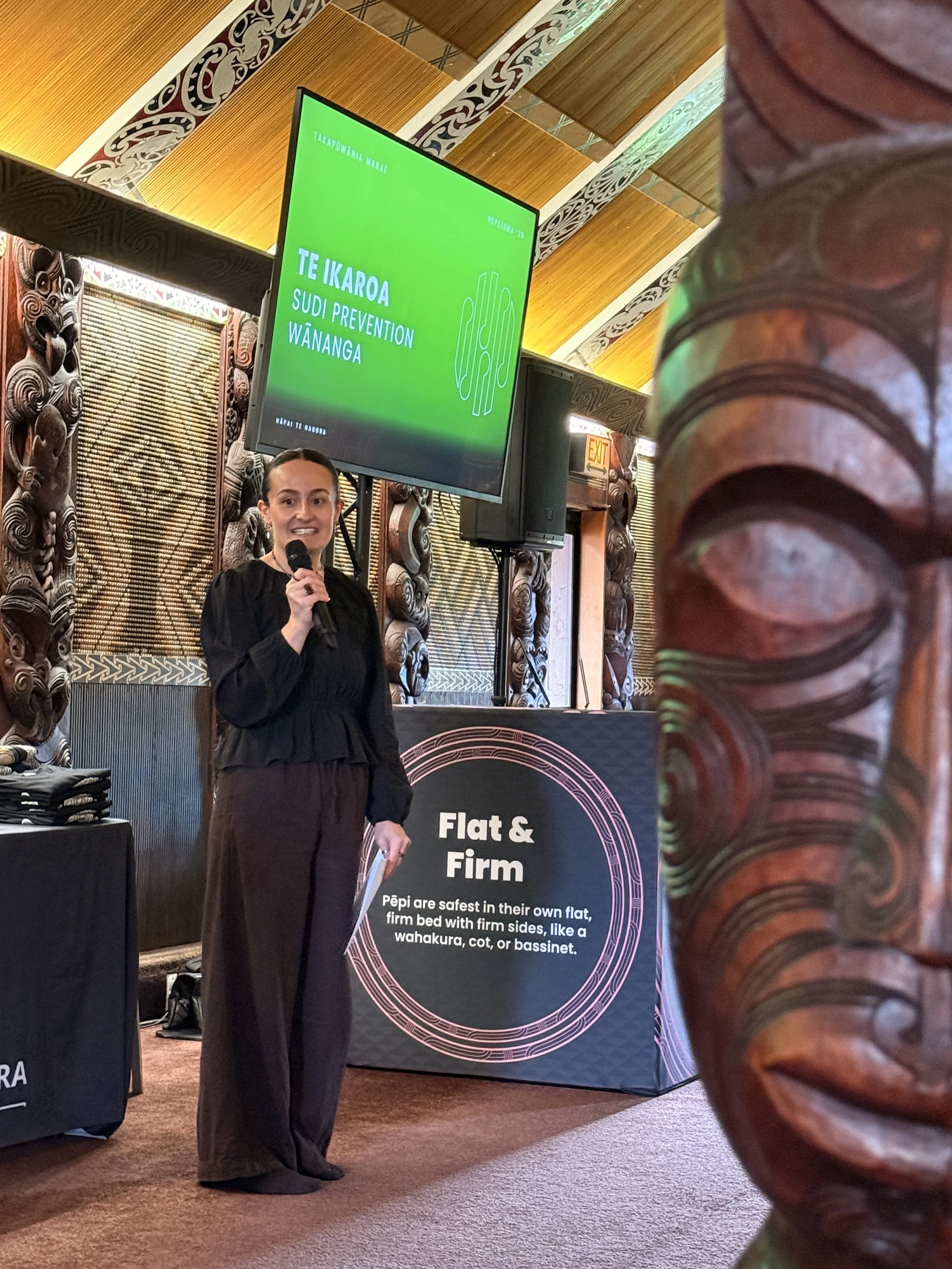
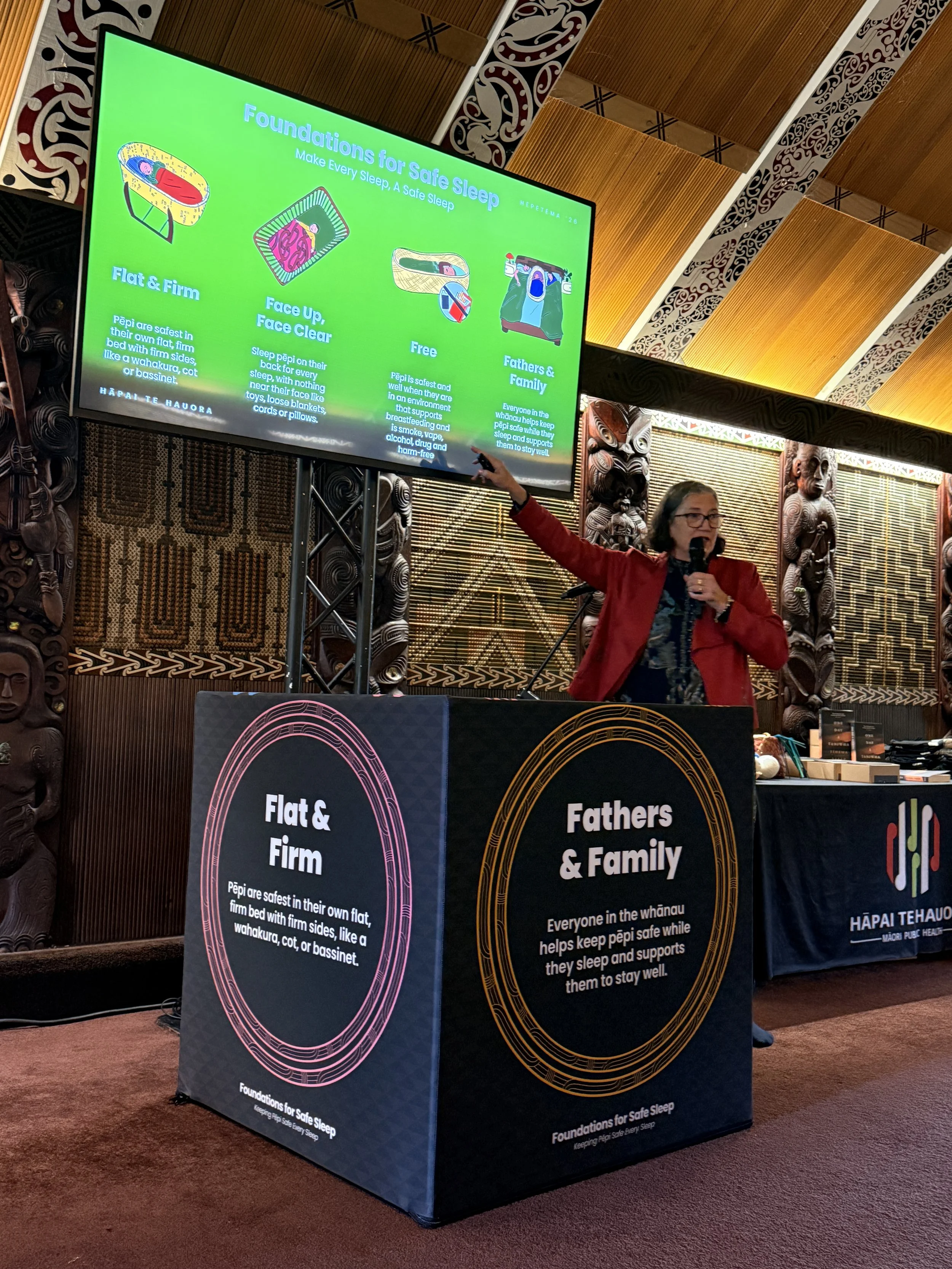
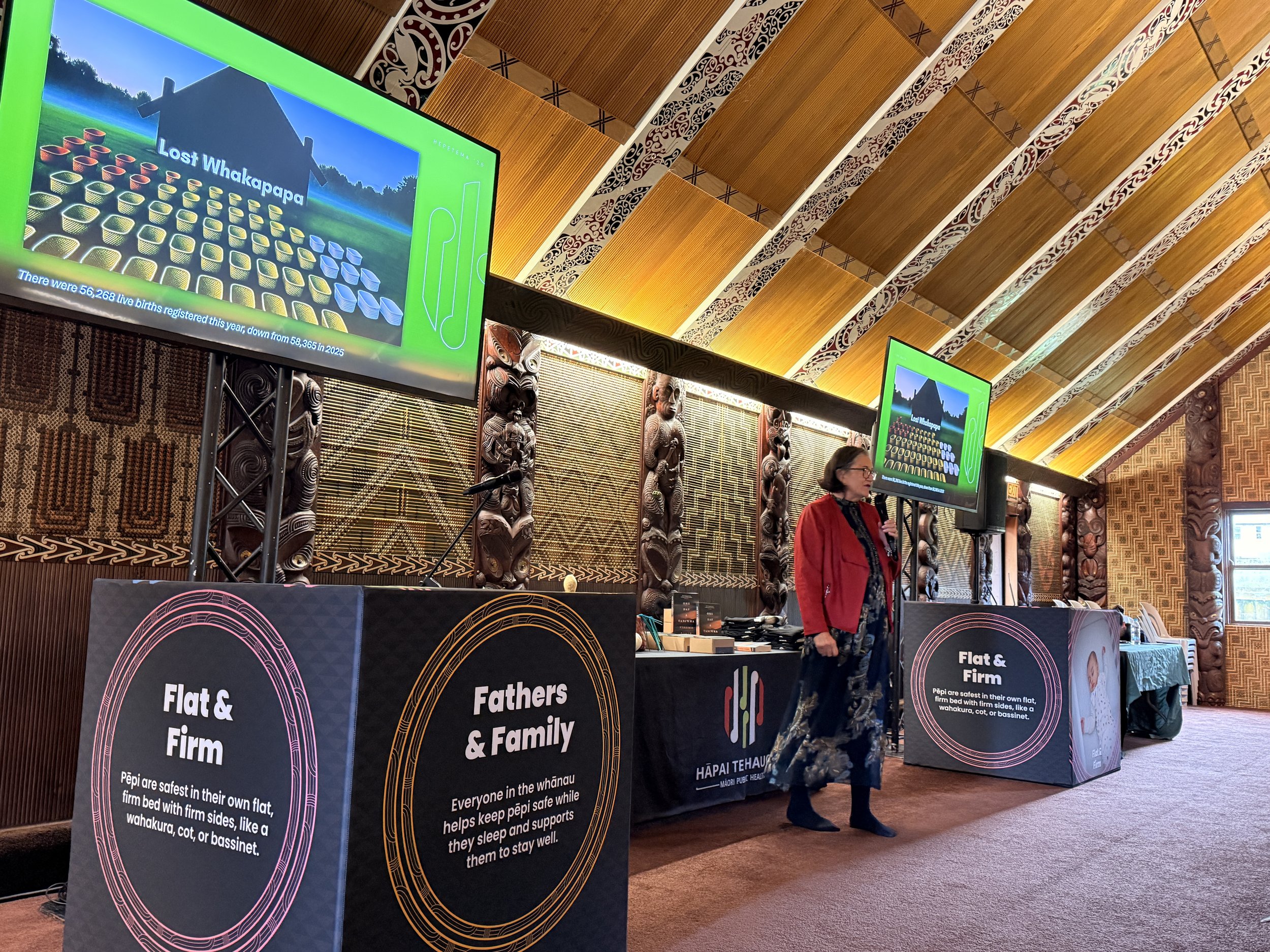
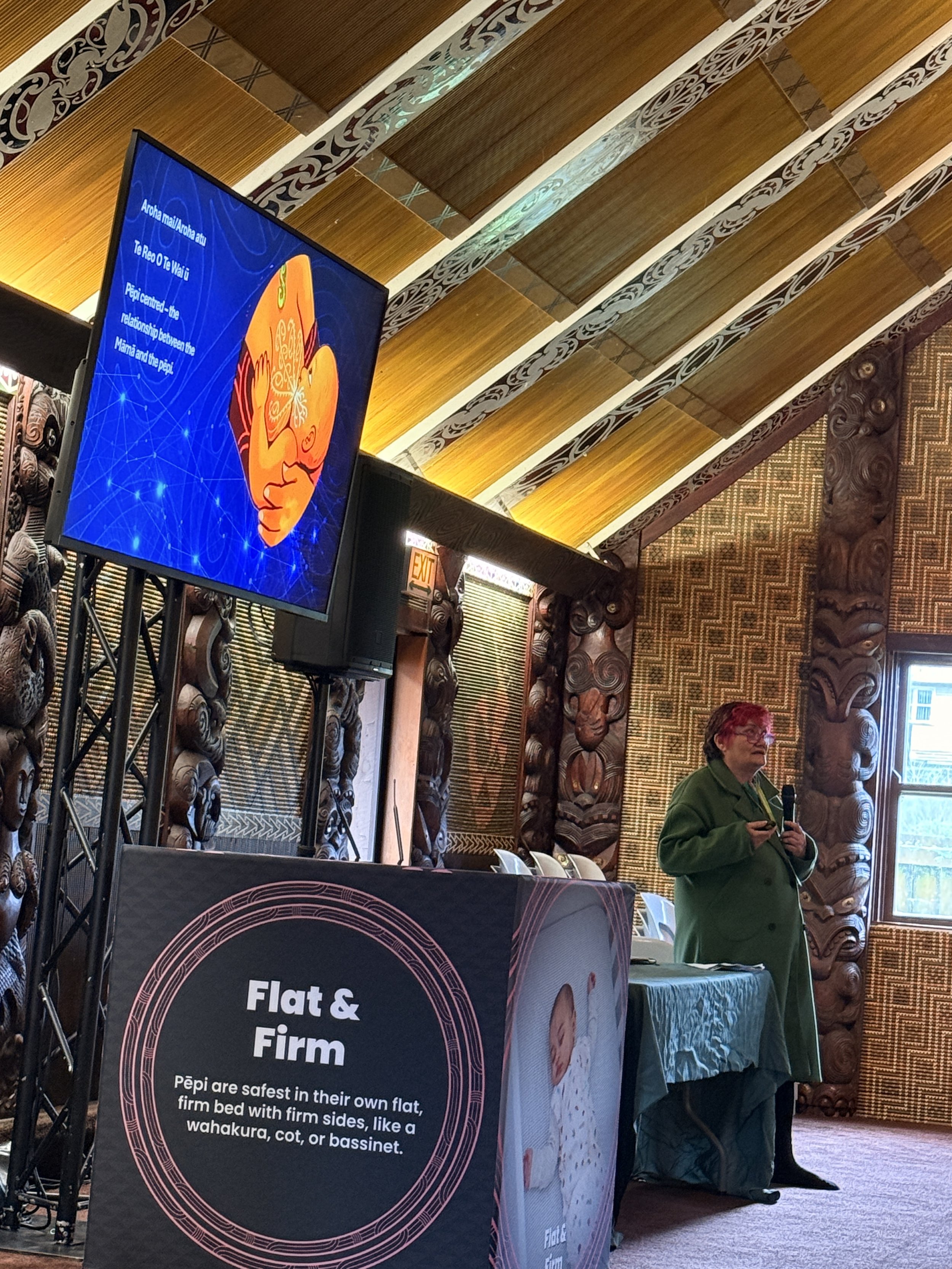
Fay Selby-Law, from the National SUDI Prevention Coordination Service at Hāpai Te Hauora, provided an update on work to strengthen understanding of safe sleep, including training for midwives, nurses, community support workers and kaimahi aligned. She also spoke about plans to develop training for whānau and the community that will aim to empower whānau champions to build knowledge and capability within their own communities.
“If we were talking to your whānau about safe sleep, what do you need? What resources do you need? Whānau-to-whānau training is important to get whānau helping themselves,” Fay said.
She introduced the updated Foundations for Safe Sleep: Face Up, Face Clear; Flat and Firm; Free; and Fathers and Families. The inclusion of fathers and wider whānau recognises that responsibility for the wellbeing of pēpi extends beyond the nuclear family to everyone involved in their care.
Māori hauora practitioner Carmen Tima-Parata spoke about breastfeeding as a protective factor against SUDI and its alignment with te ao Māori and mātauranga Māori. Drawing on her research with communities in Te Tai Tokerau, Carmen shared how pūrākau and ancestral knowledge illustrate the enduring connections between whenua, kai, breast milk and the survival of pēpi.
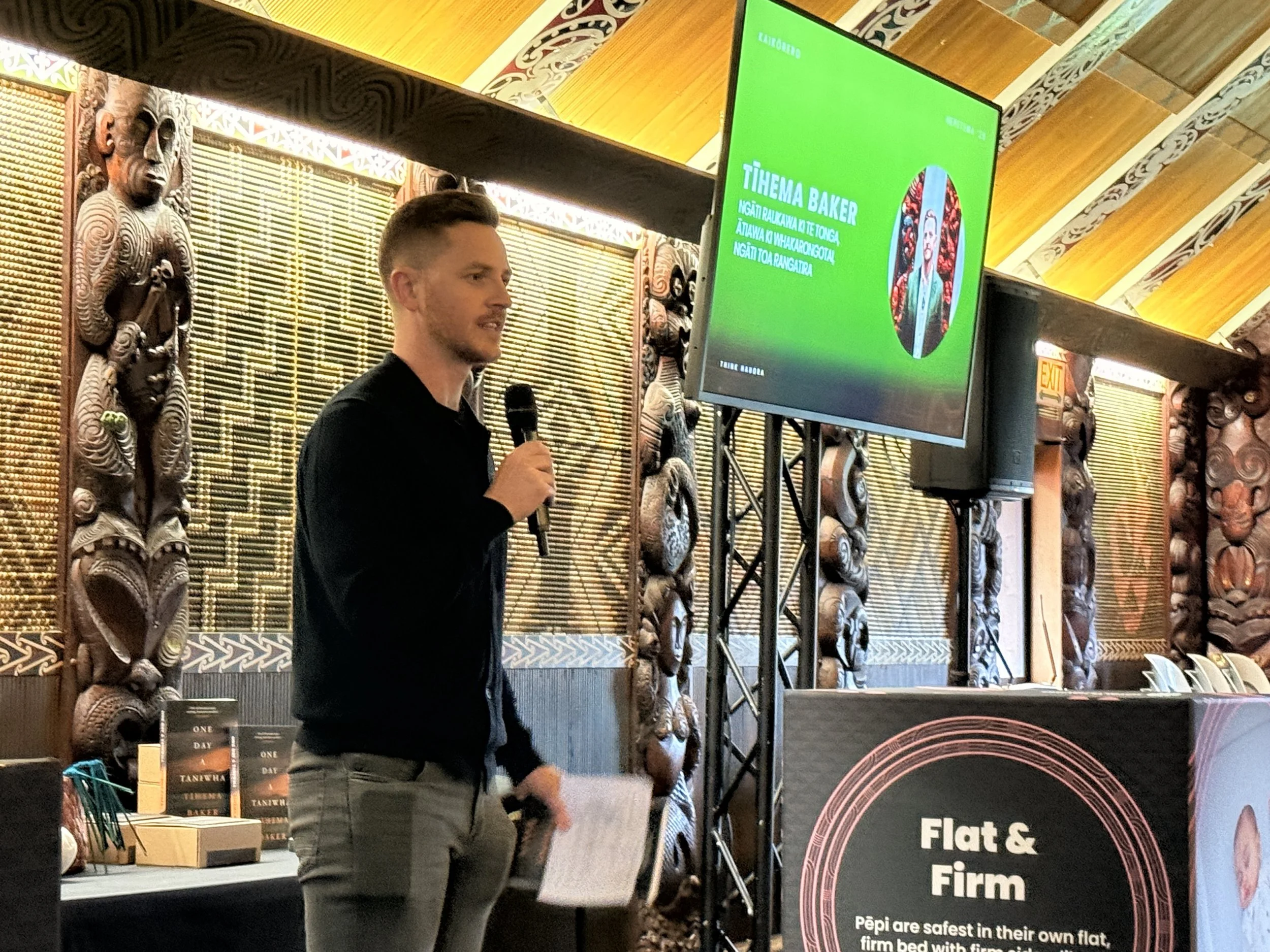
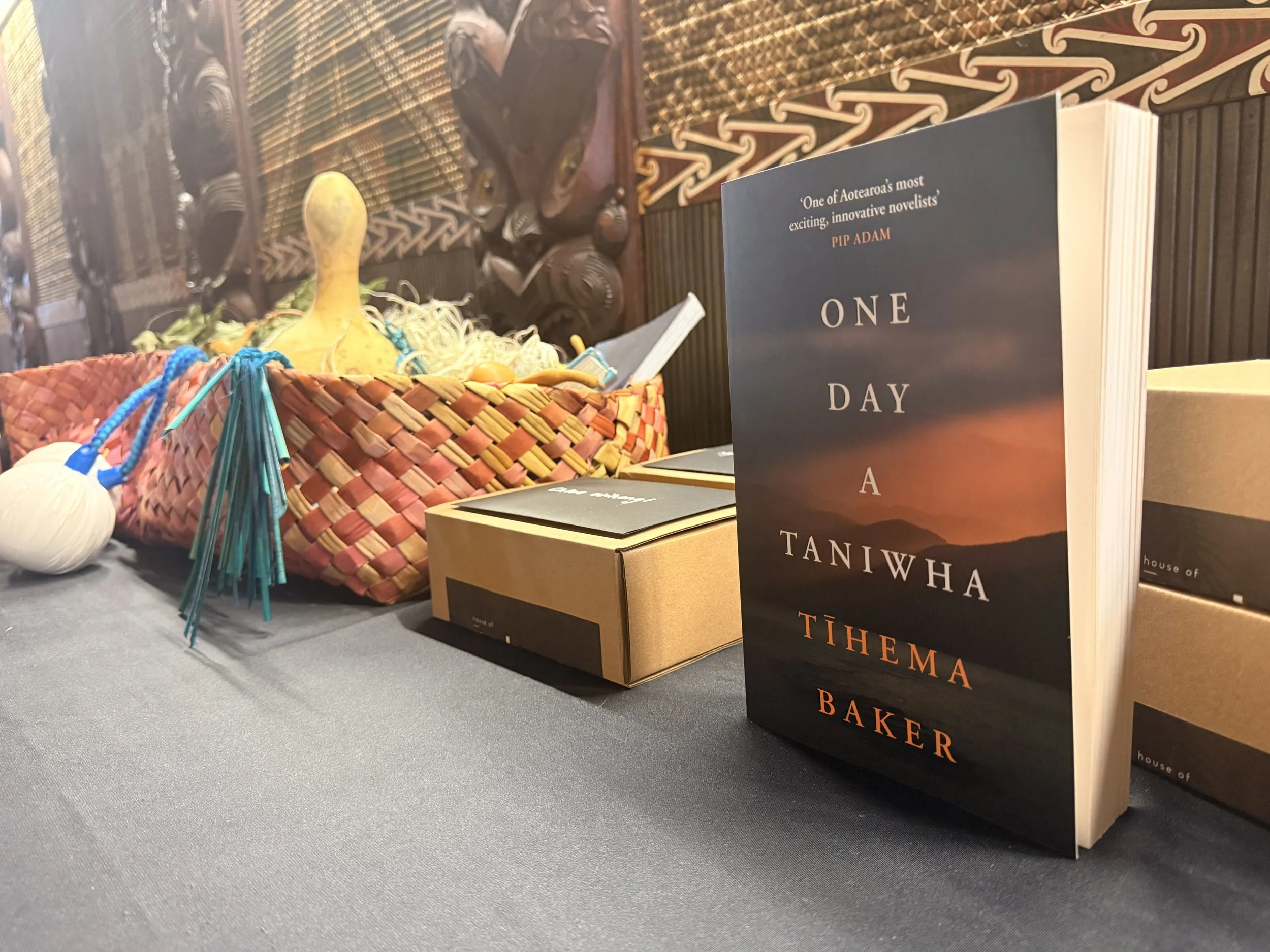
A highlight of the morning was an address from author Tīhema Baker, whose recently launched book, One Day a Taniwha, explores the pressures and experiences of a new pāpā. Inspired partly by accounts of Ngāti Toa Rangatira rangatira Te Rauparaha openly expressing his feelings, Tīhema reflected on how many tāne today have instead been conditioned to suppress emotion and simply “man up”.
Tīhema shared a deeply personal experience of feeling overwhelmed by anger and sleep deprivation while trying to settle his crying pēpi. Remembering the advice of his midwife, he placed his baby somewhere safe and walked away. The experience became the beginning of a journey of learning, therapy and self-discovery.
“Having another tāne I could talk to without any judgement, unpacking those things that had taken root and having a forum to process that stuff, was extremely valuable,” he said.
The afternoon session began after a beautiful lunch with Chloe Wihongi, founder of Ahuru Mōwai, who explored strengthening practice with whānau through pūrākau, mātauranga and whanaungatanga.
Ngaroma Whiting from Tūpuna Parenting joined the evening session to provide kōrero on the ways we might reframe our language to enhance our practice whilst protecting the mana and tapu of pēpi. A worthwhile refresh for many of our attendees.
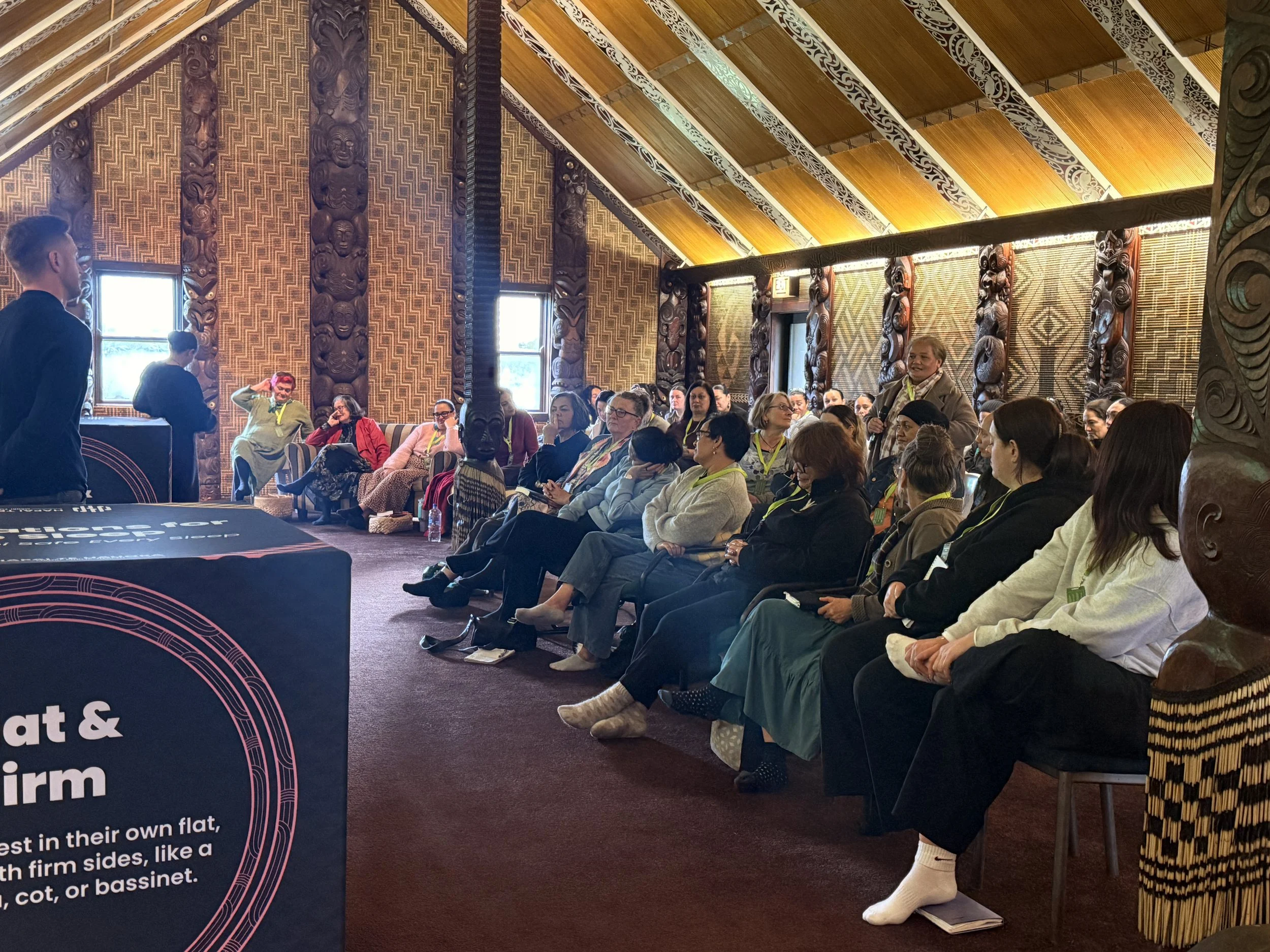
Practitioners travelled from Wairarapa, Manawatū, Kāpiti, Waiwhetū and Pōneke to attend. Hosting the wānanga at Takapūwāhia provided a meaningful setting where professional development, mātauranga Māori and the collective commitment to protecting pēpi could come together.
Ora Toa Tamariki Ora Best Start to Life Team Lead Natalie Kini said having the wānanga close to the team’s offices made the learning more accessible for busy health workers and created an important professional development opportunity for new kaimahi.
“It’s a great kaupapa to be a part of. Having the wānanga close to our offices made it much easier for our team to attend. It provided valuable learning for our staff, particularly our newer nurses, and helped strengthen connections across the sector,” said Natalie.
Hosting this important kaupapa at Takapūwāhia was a source of pride and reinforced the marae as a place where whānau, practitioners and mātauranga can come together to support the health and wellbeing of our youngest generation.