
Health Notices & UpdatesStay up to date with important health information, service changes, seasonal advice, and community notices from Ora Toa.
Free flu vaccinations
Influenza vaccinations are NOW FREE for tamariki aged 6 months to under 5 years of age.
Pharmac has brought this change forward because young tamariki are experiencing higher rates of flu-related hospitalisation and severe illness this season.
If your tamaiti hasn’t had their flu vaccine this year, you can:
book an appointment with your GP or nurse practitioner
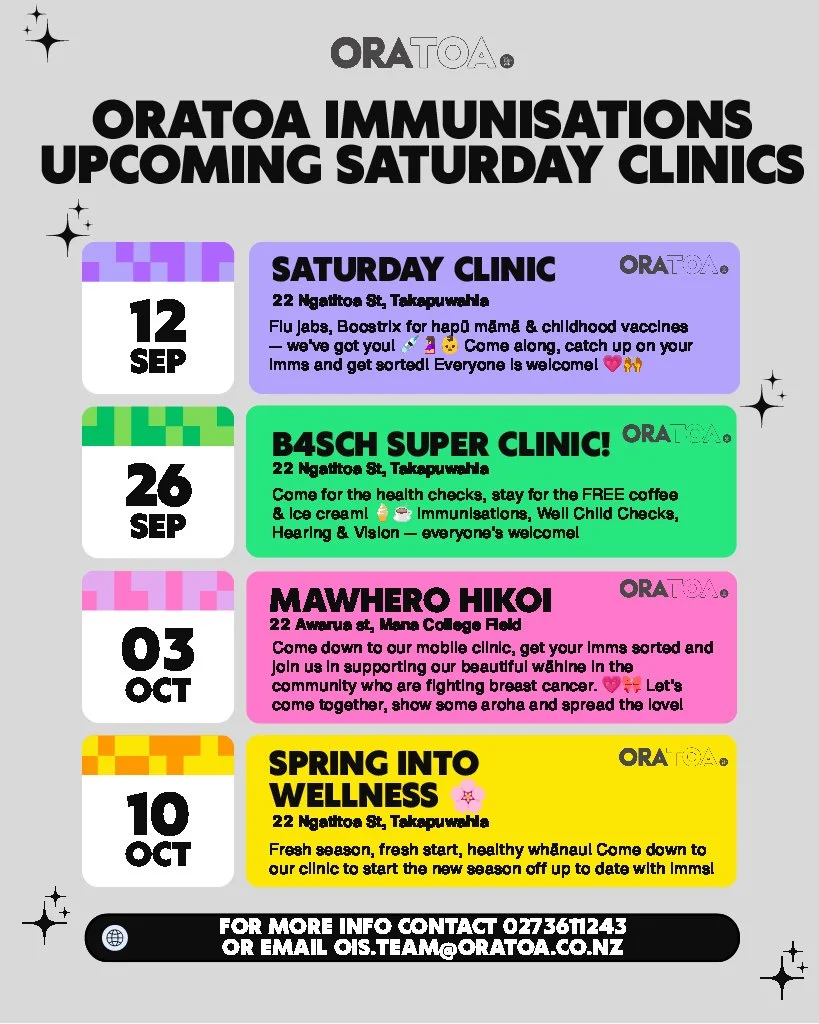
attend one of our Saturday immunisation clinics
ask about it at your next routine childhood vaccination visit
Additionally, if your tamaiti is under 3 years, you can get the vax at Unichem Life Pharmacy at North City Mall. Other pharmacies vaccinate tamariki 3 years and older.
If you’re unsure about your child’s vaccination status, please contact your medical centre.
12 Month Prescriptions
From 1 February, some patients with stable long‑term health conditions may be able to receive prescriptions lasting up to 12 months.
Your doctor will decide what is safe based on your health, medications, and monitoring needs. Not everyone will be eligible.
-
To be considered for a 12-month prescription, you’ll need an annual in-person check-up with a doctor who knows you.
When booking, please let us know this is the reason for your appointment.
This visit will focus on your long-term health conditions and medicines only.
If you need any blood tests, these should be done before your appointment.
-
Pharmacies can still only dispense up to 3 months at a time (6 months for the oral contraceptive pill).
All repeats must be collected from the same pharmacy.
There are no changes for controlled medicines like codeine, tramadol, morphine, zopiclone, benzodiazepines, or ADHD stimulant medicines.
-
You may not be eligible if you:
Have an unstable medical condition.
Changed medicine or dose in the past 6 months.
Need monitoring (e.g. blood tests, ECGs, blood pressure).
Have reduced kidney function.
Are pregnant or on unsafe medicines.
Are under 18 or over 65 (exceptions may apply).
Find it hard to take medicines regularly.
-
Some medicines need closer monitoring, including:
Blood pressure medicines.
Diabetes medicines.
Blood thinners (e.g. warfarnin).
Epilepsy medicines.
Mental health medicines.
Regular anti-inflammatories (e.g. ibuprofen).
Acne medicines.
Taking 5 or more regular medicines.
Measles Update - Wellington Region
New cases have been confirmed in our wider region. Locations of interest include central Wellington, Newtown, Mana and Palmerston North.
Measles is a very serious and highly infectious disease
-
The first symptoms of measles are similar to other respiratory illnesses, such as a cold, COVID-19 or flu (influenza) which means it can be hard to know you have measles.
Symptoms of measles are:
fever (a temperature of at least 38°C)
cough
runny nose
sore, red eyes
rash.
For more information, click here to see the Health NZ website
-
If you or someone you know has symptoms that you are worried about, contact any of the following:
Call your usual GP, doctor, Hauora or healthcare provider.
Call Healthline FREE on 0800 611 116 anytime 24/7.
Call 111 for an ambulance in an emergency.
Because measles is so contagious, it is important to call your healthcare provider before you visit them in person.
-
The best protection against measles is the free measles, mumps and rubella (MMR) vaccine.
Check if you have received and need the vaccine with your GP/Nurse
If you haven’t already, you can get the vaccine for free by contacting your GP/Nurse.
For more information, click here to see the Health NZ website
-
Locations of interest identified between 15–19 April (including central Wellington, Newtown, Mana and Palmerston North).
For more information, click here to see the Health NZ website